
Calisthenics for Strength: Building Muscle With Bodyweight
Bodyweight training builds serious muscle if you treat it like weight training: progressive overload, hard sets and enough food.
SteroidsCanada.org editorial teamUpdated · 2 min read
On this page
Calisthenics, training with your own body weight, has a reputation as either beginner work or a gymnast’s art form. In between is a highly effective way to build muscle and strength that needs almost no equipment. The key is the same as in the weight room: make it progressively harder.
Does it build muscle?
Muscle grows when sets are taken close to failure with enough total work, across a wide range of loads. Studies comparing push-ups with bench press at similar effort found similar gains in chest muscle and strength. The challenge with bodyweight work is increasing the difficulty as you get stronger.
Five ways to progress
- Leverage: move from incline push-ups to floor push-ups to decline push-ups.
- Range: deficit push-ups on handles, full-depth squats.
- Single-limb work: pistol squats, archer push-ups, one-arm progressions.
- Tempo: three- to five-second lowering phases.
- External load: a weight vest, dip belt or backpack.
Progressions for the main movements
| Movement | Beginner | Intermediate | Advanced |
|---|---|---|---|
| Push | Incline push-up | Push-up, dips | Archer or weighted push-up, ring dips |
| Pull | Inverted row | Pull-up, chin-up | Weighted or archer pull-up |
| Legs | Bodyweight squat | Bulgarian split squat | Pistol squat, shrimp squat |
| Hinge | Glute bridge | Single-leg hip thrust | Nordic hamstring curl |
| Core | Plank | Hanging knee raise | Hanging leg raise, L-sit |
A sample three-day routine
Full body, three times a week, three sets each, finishing each set one or two reps short of failure:
- Pull-ups or inverted rows
- Push-ups (a variation that keeps you under about 20 reps)
- Bulgarian split squats
- Dips
- Single-leg glute bridges
- Hanging knee or leg raises
When you reach the top of your rep range on all sets, move to the next progression.
The lower-body problem
Legs are strong, so bodyweight squats quickly become too easy. Single-leg work, slow tempos, jumps and a loaded backpack keep them challenged. Many people combine calisthenics upper body with some barbell or dumbbell leg work.
Calisthenics and enhancement
Some people use anabolic compounds alongside bodyweight training. The same principles of progressive overload, nutrition and recovery apply, as do the same health risks. Heavier body weight also makes many skills harder. If you are considering compounds, our harm reduction guide covers the essential checks.
Nutrition
To build muscle you still need enough protein, about 1.6 to 2.2 g per kg, and enough calories. Calisthenics athletes often stay leaner for skill work, which makes a modest surplus important. See nutrition for muscle growth.
Training outdoors and at home
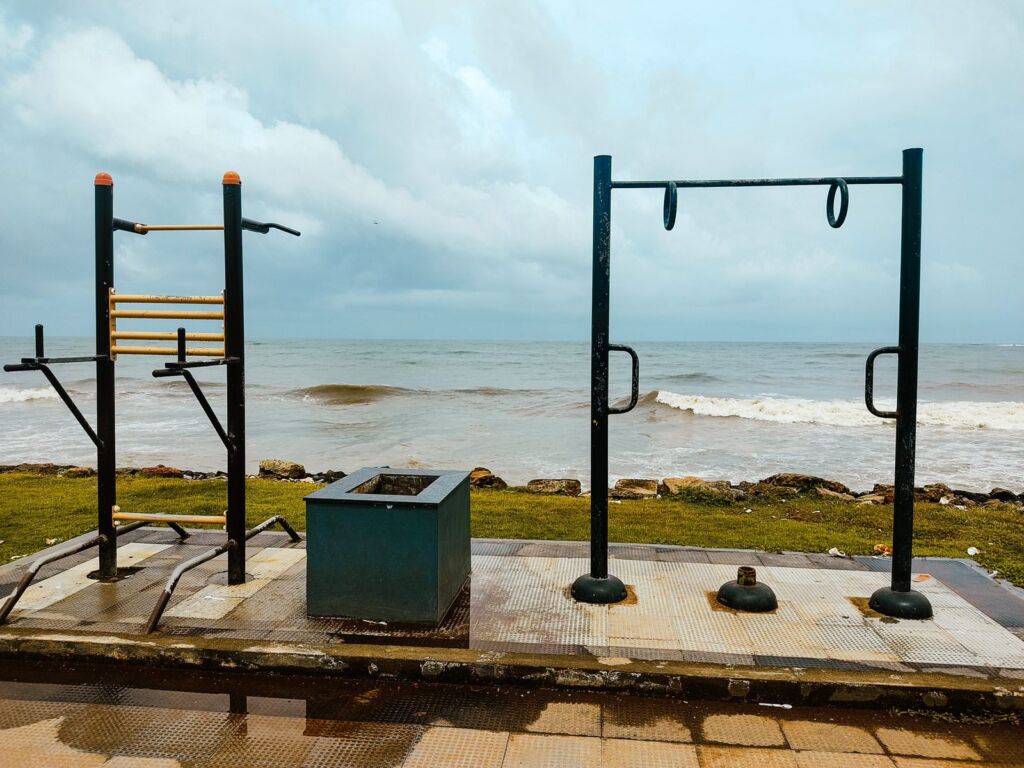
Many Canadian parks now have outdoor fitness stations with pull-up and dip bars, ideal from spring to fall. At home, a doorway pull-up bar, a pair of rings hung from a beam or bar, and resistance bands cover almost every exercise above for a modest cost. In winter, a sturdy table for inverted rows and a backpack loaded with books for extra weight keep progress going.
Injury prevention
Shoulders and elbows take a lot of strain in dips, muscle-ups and ring work. Progress gradually, warm up the shoulders, and avoid jumping to advanced skills before you can do controlled basics for solid reps.
Questions
How often should I train calisthenics?
Three full-body sessions a week, or four with an upper and lower split, suits most people. Leave a day between hard sessions for the same muscles.
Is calisthenics good for fat loss?
It builds and keeps muscle, which helps, but fat loss still depends on a calorie deficit. Circuits of bodyweight exercises can add conditioning.
Can you build big muscles with calisthenics only?
Yes, especially in the upper body. Studies show push-ups can build chest muscle similar to bench press when loads are comparable.
How many reps should I do?
Anything from about 5 to 30 reps builds muscle if sets end close to failure. Very high reps become endurance work.
What equipment do I need?
A pull-up bar, parallel bars or sturdy chairs for dips, and optionally rings and resistance bands.
Can I combine calisthenics and weights?
Yes. Many lifters use pull-ups, dips and push-up variations alongside barbell work.
Sources
General information, not medical advice. Written for adults in Canada. Anabolic steroids are Schedule IV under the Controlled Drugs and Substances Act. Talk to a licensed healthcare provider and get bloodwork before using any compound.
Keep reading
 Training and nutrition · 2 minCrossFit for Fat Loss: What to Expect and How to Start SafelyCrossFit's biggest fat-loss advantage is not the workouts themselves, it is the community that keeps people showing up.
 Training and nutrition · 2 minWinter Weight Loss: Staying Active and On Track Through a Canadian WinterShorter days, cold weather and holiday food make winter the hardest season for weight loss. A plan made for it makes the difference.
 Training and nutrition · 2 minStress Eating: Why It Happens and How to Break the CycleEating to cope with stress is common and human. Shame makes it worse; a few practical systems make it smaller.