
RPE and RIR: How to Train by Effort Instead of Guesswork
Percentages and fixed rep targets ignore bad sleep, stress and good days. Rating effort with RPE and reps in reserve lets the weight follow how you actually perform on the day.
SteroidsCanada.org editorial teamUpdated · 3 min read
On this page
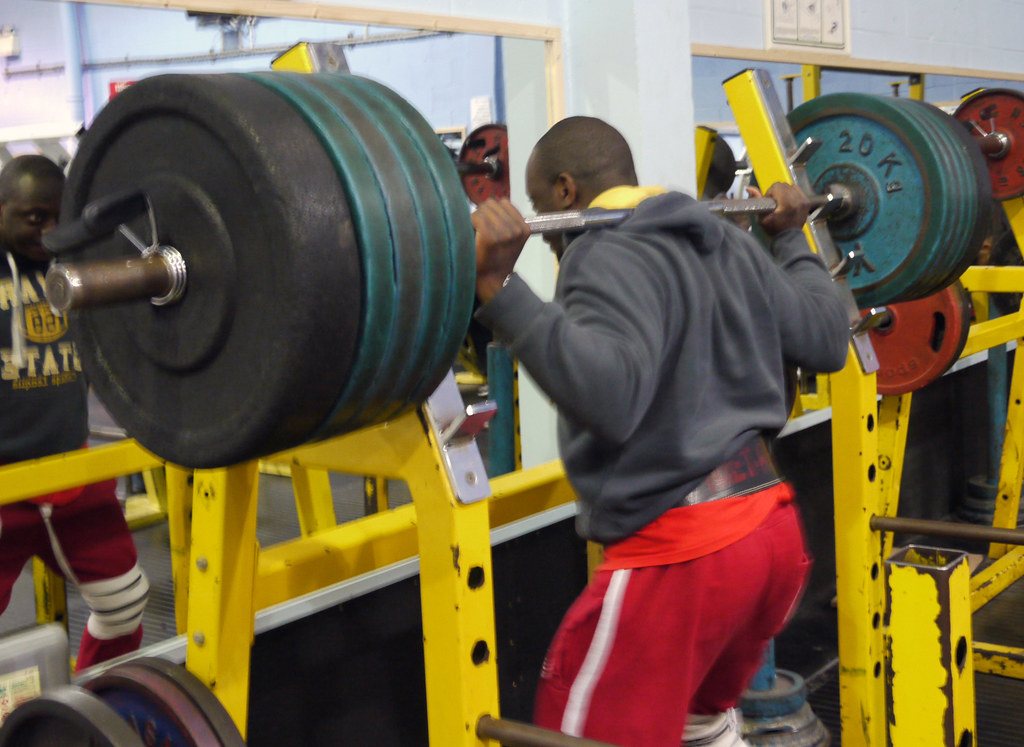
Most programmes tell you to lift a set weight for a set number of reps. That works until real life gets involved: a short night of sleep, a stressful week at work, a cold, or a day where everything feels light. Rating each set by effort lets the plan bend with you. The two tools for that are RPE, the rating of perceived exertion, and RIR, reps in reserve.
The two scales in plain terms
Reps in reserve is the simplest idea in lifting: when you rack the bar, how many more clean reps could you have done? RPE for lifting uses a 1 to 10 scale built on the same question, so the two map onto each other.
| RPE | Reps in reserve | What it feels like |
|---|---|---|
| 10 | 0 | Could not do another rep, or add any weight |
| 9.5 | 0, maybe 1 | No more reps, but slightly more weight was possible |
| 9 | 1 | One more rep, definitely |
| 8 | 2 | Two more reps |
| 7 | 3 | Bar moving quickly, three more reps |
| 6 or below | 4 or more | Warm-up territory |
The scale was adapted for strength training by Mike Zourdos and colleagues in 2016, and it has since become standard in powerlifting coaching and in many hypertrophy programmes.
How close to failure you need to train
A 2023 meta-analysis by Martin Refalo and colleagues pooled studies on how proximity to failure affects muscle growth. Growth was similar across a fairly wide range, and sets that ended a few reps short of failure built nearly as much muscle as sets taken all the way. Strength tended to benefit from heavier loads more than from grinding to failure.
The practical lesson: you do not need to fail every set. Stopping one to three reps short on squats, deadlifts and presses keeps technique clean and lets you recover for the next session. Machines, cables and isolation exercises are safer places to push closer to zero.
Learning to rate honestly
Studies consistently find that lifters underestimate how many reps they have left, and the error grows with higher-rep sets. A set of 15 that feels like RPE 8 is often closer to RPE 6. Accuracy improves the closer you get to failure and the more experienced you are.
Three habits help:
- Calibrate occasionally. On a safe exercise such as a machine press or leg extension, take your last set to genuine failure and compare it with what you predicted.
- Watch bar speed. When a rep slows noticeably compared with the first one, you are usually within two or three reps of failure.
- Rate immediately. Write the number down before you sit down. Ratings drift once you have rested.
Using effort to set the weight
RPE turns a fixed programme into an adjusting one. A common pattern is a “top set” followed by back-off sets:
- Work up to a single set of five at RPE 8.
- Take 5 to 10 percent off that weight.
- Do three more sets of five with the lighter load.
On a good day the top set will be heavier; on a bad day lighter. Either way you get the right training stress without guessing.
RPE and recovery from hard cycles of training
Effort ratings are especially useful when recovery capacity changes: during a calorie deficit, during illness, when travelling, or after a change in medication or hormones. Some lifters find their strength rises quickly while tendons and joints lag behind. Keeping most sets at two or three reps in reserve protects connective tissue while still producing progress.
Where effort ratings fall short
- They are subjective. Two people can rate the same set differently, so compare yourself only with yourself.
- They are less reliable for very light, high-rep work, where burning and breathing cloud the judgement.
- They do not replace a plan. RPE adjusts the weight; you still need a structure for exercises, sets and progression.
A simple way to start
For the next four weeks, keep your current programme but add one column to your log: the RPE of the last set of each exercise. Aim for 7 to 8 on big compound lifts and 8 to 9 on isolation work. Increase the weight whenever the last set comes in lower than planned. After a month you will have a much better feel for your own effort, and a record that shows when you are recovering well and when you are not.
Questions
Is RPE the same as how tired I feel?
No. Session RPE measures overall fatigue, but set RPE in lifting is tied to reps in reserve: how many more clean reps you could have done with that load.
Do I have to train to failure to grow?
No. Research finds similar growth when sets stop a few reps short of failure, as long as total volume is enough. Going to failure on every set mostly adds fatigue.
Can beginners use RPE?
Yes, but their ratings are less accurate at first. Pairing RPE with a simple rule such as adding weight when every set feels easier than planned works well.
What if my RPE is higher than planned?
Drop the load by about 5 percent for the next set, or keep the load and do fewer reps. One rough day is normal; a pattern of high ratings means you need more recovery.
Sources
- Zourdos MC et al. Novel resistance training-specific RPE scale measuring repetitions in reserve. J Strength Cond Res, 2016
- Refalo MC et al. Influence of resistance training proximity-to-failure on skeletal muscle hypertrophy: a systematic review and meta-analysis. Sports Med, 2023
- Helms ER et al. Application of the repetitions in reserve-based RPE scale for resistance training. Strength Cond J, 2016
General information, not medical advice. Written for adults in Canada. Anabolic steroids are Schedule IV under the Controlled Drugs and Substances Act. Talk to a licensed healthcare provider and get bloodwork before using any compound.
Keep reading
 Training and nutrition · 2 minStaying Motivated Through a Long Bulk: Mental Strategies That WorkBulking is slow, softer-looking and often uncomfortable. The lifters who finish one well rely on systems, not willpower.
 Training and nutrition · 2 minCrossFit for Fat Loss: What to Expect and How to Start SafelyCrossFit's biggest fat-loss advantage is not the workouts themselves, it is the community that keeps people showing up.
 Training and nutrition · 2 minCalisthenics for Strength: Building Muscle With BodyweightBodyweight training builds serious muscle if you treat it like weight training: progressive overload, hard sets and enough food.