Testosterone and Growth Hormone: How They Differ and Interact
Testosterone and growth hormone are often mentioned together. They act through different systems, carry different risks and have very different evidence behind them.
SteroidsCanada.org editorial teamUpdated · 3 min read
On this page
Testosterone is a steroid hormone made mostly in the testes. Human growth hormone (somatropin) is a protein hormone made by the pituitary gland. Both decline with age and both affect body composition, which is why they are often discussed together. Under the surface they work very differently.
How each one works
Testosterone
- Steroid that enters cells and binds androgen receptors
- Directly raises muscle protein synthesis
- Converts partly to estradiol and DHT
- Injected into muscle, weekly or more often
Growth hormone
- Protein that binds receptors on the cell surface
- Acts largely through IGF-1 made in the liver
- Mobilises fat and raises blood sugar
- Injected under the skin, usually daily
Medical uses
Testosterone treats confirmed low testosterone in men; guidelines work out to roughly 75 to 100 mg a week of enanthate or cypionate, adjusted by bloodwork.
Growth hormone in adults is approved for confirmed growth hormone deficiency, usually caused by pituitary disease, and a small number of other conditions such as HIV-associated wasting. Adult deficiency treatment typically starts at around 0.2 to 0.4 mg a day, adjusted by IGF-1 levels.
What the evidence shows
Testosterone reliably increases muscle size and strength in a dose-dependent way. Growth hormone in healthy adults is different: reviews of controlled trials found it increased lean body mass, but much of that was water and connective tissue, with little or no gain in strength or exercise capacity. Combined, the two raise lean mass more than either alone in some studies, along with more side effects.
Distinct risks
| Testosterone | Growth hormone |
|---|---|
| Natural testosterone and fertility shut down | Fluid retention and swelling in hands and feet |
| Higher hematocrit | Joint and muscle pain |
| Blood pressure and HDL changes | Carpal tunnel symptoms (numb, tingling fingers) |
| Acne, hair loss, breast tissue growth | Higher blood sugar and insulin resistance |
How they interact in the body
Testosterone and growth hormone influence each other. Testosterone, partly through its conversion to estradiol, increases growth hormone release from the pituitary, which is one reason growth hormone levels rise during male puberty. Growth hormone and IGF-1 in turn support the effects of androgens on muscle and bone. In adults with deficiencies of both hormones, replacing both produces better results than replacing either alone. In people with normal levels, adding either one mainly adds side effects alongside any gains.
Who should avoid growth hormone
- Anyone with active cancer or a history of cancer
- People with diabetes, prediabetes or a strong family history of diabetes
- Anyone with untreated sleep apnea
- People with carpal tunnel syndrome or significant fluid retention
- Anyone under 21 whose growth plates may not be closed
Handling and storage
Growth hormone is a protein and is damaged by heat, shaking and freezing. Unmixed powder is usually stored in the fridge; once mixed with bacteriostatic water, it must be refrigerated and used within the period stated on the product. Gently swirl, never shake, when mixing, and use a new insulin syringe for each injection.
Myths and facts
| Myth | Fact |
|---|---|
| Growth hormone is an anti-ageing cure | Trials in healthy older adults found modest body composition changes and more side effects, not better function. |
| More IGF-1 is always better | High IGF-1 over the long term is linked with insulin resistance and is a concern for cancer growth. |
| Growth hormone builds strength like testosterone | Studies in healthy adults show little or no strength gain. |
Bloodwork
For testosterone: testosterone, estradiol, complete blood count, lipids, liver and kidney markers, PSA over 40. For growth hormone, add fasting glucose, HbA1c and IGF-1.
See the testosterone enanthate guide and the Human Growth Hormone product page, which lists the vial strength and mixing math.
Products in this guide
Each product page carries the chemistry, label strength, risks and references.
 Zionova Testosterone Enanthate250 mg/ml · 10 ml vial$96 · in stock
 Human Growth Hormone10 IU per vial · 10 vials with bacteriostatic water$480 · in stock
 Bacteriostatic water0.9% benzyl alcohol in sterile water · 30 ml vial$60 · in stock
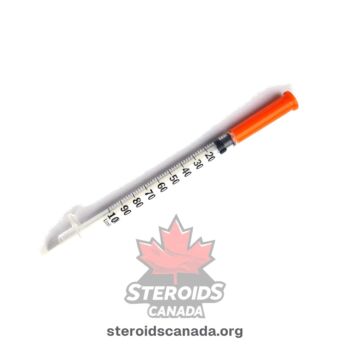 EasyTouch Insulin Syringes 30G U-100 (bag of 10)1 ml barrel, 30G x 8 mm needle · 10 syringes$15 · in stock
Questions
Does HGH build muscle like testosterone?
In healthy adults, studies show growth hormone increases lean mass mostly through water and connective tissue, with little gain in strength. Testosterone's effect on muscle is much better established.
Can growth hormone cause diabetes?
It raises blood sugar by making the body less sensitive to insulin. Long-term use at high amounts increases diabetes risk.
Why do growth hormone injections use insulin syringes?
It is injected under the skin in small volumes, measured in units or milligrams, after mixing with bacteriostatic water.
Is growth hormone legal in Canada?
Somatropin is a prescription drug in Canada. Its sale without a prescription is not permitted.
Sources
General information, not medical advice. Written for adults in Canada. Anabolic steroids are Schedule IV under the Controlled Drugs and Substances Act. Talk to a licensed healthcare provider and get bloodwork before using any compound.
Keep reading
 Compound guides · 3 minPrimobolan (Methenolone Enanthate): What It Is and Isn’tPrimobolan has a reputation as the gentle steroid. Some of that is earned and some is marketing. Here is what methenolone enanthate actually does and where the risks still sit.
 Compound guides · 3 minAnavar (Oxandrolone): Why It Is Called Mild and What That MissesOxandrolone has the gentlest reputation of any oral steroid. It earned some of that in hospitals. It still lowers HDL, still suppresses testosterone and is still taken as a 17-alpha-alkylated tablet.
 Compound guides · 4 minDeca Durabolin (Nandrolone Decanoate): A Plain GuideNandrolone decanoate has been used in medicine for anemia and muscle wasting since the 1960s. Here is what it does, why it behaves differently from testosterone, and the risks that are easy to underestimate.