
A Bodybuilding Meal Plan for Muscle Gain (Canadian Groceries)
A full day of eating built from ordinary Canadian groceries, with the numbers shown, plus how to scale it up or down for your own targets.
SteroidsCanada.org editorial teamUpdated · 2 min read
On this page
Most meal plans fail because they are built from foods nobody eats or portions nobody measures. This one uses groceries available in any Canadian supermarket and shows its numbers, so you can adjust it to your own targets. It is an example, not a prescription.
The sample day (about 3,000 calories)
| Meal | Foods | Protein | kcal |
|---|---|---|---|
| Breakfast | 4 eggs scrambled, 2 slices whole-grain toast, 1 cup milk, an orange | 40 g | 620 |
| Snack | 3/4 cup Greek yogurt, 1/2 cup oats, 1 cup berries, honey | 25 g | 420 |
| Lunch | 150 g chicken thigh, 1.5 cups cooked rice, stir-fried vegetables, 1 tbsp canola oil | 40 g | 760 |
| Pre-training | Banana and a scoop of whey in water | 25 g | 230 |
| Dinner | 150 g salmon, 300 g baked potatoes, green salad with olive oil dressing | 36 g | 720 |
| Evening | 1/2 cup cottage cheese with pineapple | 14 g | 150 |
| Total | About 180 g | About 2,900 to 3,000 | |
That works out to roughly 180 g protein, 360 g carbohydrate and 85 g fat.
Scaling it to your numbers
- Find your targets with the macro calculator.
- Keep the protein foods roughly the same.
- To add 300 calories: an extra cup of rice or a larger potato plus a tablespoon of peanut butter.
- To remove 300 calories: halve the rice at lunch and drop the honey and cottage cheese.
- Weigh yourself a few mornings a week and adjust after two to three weeks.
High-protein swaps
Animal proteins
- Chicken breast or thigh
- Extra-lean ground beef or bison
- Canned tuna and salmon
- Eggs and egg whites
- Greek yogurt, skyr, cottage cheese
Plant proteins
- Extra-firm tofu and tempeh
- Lentils, chickpeas, black beans
- Edamame
- Soy milk
- Pea or soy protein powder
Meal prep in 90 minutes
- Bake two trays of chicken thighs with different seasonings.
- Cook a large pot of rice and a tray of potatoes.
- Roast two trays of mixed vegetables.
- Portion into containers for four days; freeze the rest.
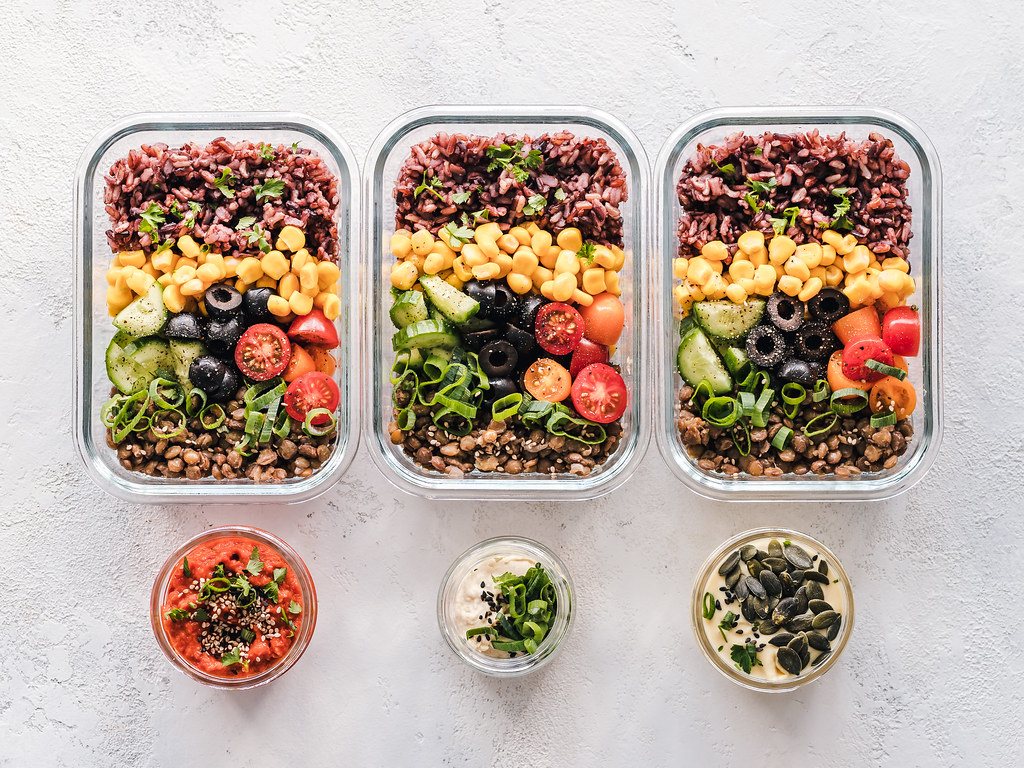
- Keep yogurt, eggs, fruit and oats on hand for breakfasts and snacks.
Our guide to meal prep ideas has more variety.
Budget tips
Protein is usually the most expensive part. Eggs, canned fish, lentils, chicken thighs, frozen fish fillets and large tubs of Greek yogurt keep costs down. Buy rice and oats in bulk, use frozen vegetables and fruit, and watch for flyer sales on meat to freeze.
Eating enough when appetite is low
Many people starting a muscle-building plan find 3,000 calories hard to eat. Liquid calories help: a smoothie with milk, oats, banana, peanut butter and protein powder can add 700 calories without feeling like a meal. Calorie-dense additions such as olive oil on vegetables, nuts on yogurt and an extra slice of toast with peanut butter raise intake quietly. Eat on a schedule rather than waiting for hunger, and keep high-fibre vegetables to sensible portions so they do not fill you up before the protein and carbs.
Tracking whether it works
Weigh yourself a few mornings a week and look at the weekly average. For a lean bulk, aim to gain about 0.25 to 0.5 percent of body weight a week. If the average does not move for two weeks, add 200 to 300 calories; if it rises faster than planned and your waist is growing quickly, trim a similar amount.
Adjusting for a cut
For fat loss, keep protein the same or slightly higher, reduce carbs and fats, and add more vegetables for volume. A deficit of 300 to 500 calories below maintenance is enough for steady loss. See preserving muscle while losing weight.
Questions
Is 3,000 calories right for me?
It depends on your size and activity. Use the macro calculator for an estimate, then adjust based on your weight trend over two to three weeks.
Can I eat the same meals every day?
Yes, many lifters do. Rotating vegetables, fruit and protein sources over the week covers more nutrients.
How do I make it cheaper?
Use eggs, canned tuna, lentils, frozen vegetables, oats, rice and chicken thighs, and buy in bulk.
What if I am vegetarian?
Swap in tofu, tempeh, legumes, Greek yogurt, eggs and soy milk. Our vegan muscle-building guide covers plant-only plans.
Sources
General information, not medical advice. Written for adults in Canada. Anabolic steroids are Schedule IV under the Controlled Drugs and Substances Act. Talk to a licensed healthcare provider and get bloodwork before using any compound.
Keep reading
 Training and nutrition · 2 minPre- and Post-Workout Nutrition While Cutting FatWhen calories are tight, putting more of them around training helps you keep strength and muscle. It does not need to be complicated.
 Training and nutrition · 2 minAre BCAAs Worth It? What Lifters Need to KnowBCAAs are one of the best-selling supplements in gyms. For anyone eating enough protein, they add almost nothing.
 Training and nutrition · 2 minStaying Motivated Through a Long Bulk: Mental Strategies That WorkBulking is slow, softer-looking and often uncomfortable. The lifters who finish one well rely on systems, not willpower.